
Protecting Alaska’s Seafloor: Why the Current Trawling Comment Period Matters
For decades, The Boat Company has worked through administrative processes, litigation, and public education to reduce the impacts of trawling in Alaska.
Today, there is a public comment opportunity before the Alaska Board of Fisheries that addresses how certain trawl fisheries operate in Alaska state waters — specifically within three miles of shore.
While trawling does not occur in Southeast Alaska, where we operate, activity elsewhere in the Gulf of Alaska affects the salmon, halibut, and marine ecosystems that are central to our region.
This is why we are supporting efforts led by the Alaska Healthy Habitat Alliance — a coalition of sport, commercial, personal-use fishing organizations, and Alaska coastal communities — to strengthen oversight of so-called “pelagic” trawling.
The Issue: When “Midwater” Trawls Hit the Bottom
Certain pollock and slope rockfish fisheries operate using what the industry refers to as “pelagic” (or midwater) trawl gear. In theory, these nets are designed to fish above the seafloor.
However, as currently regulated, these trawls frequently make contact with the seabed.
Bottom trawling is often compared to clearcutting (which, by now, you know: The Boat Company stands adamantly against in The Tongass National Forest). It can damage complex seafloor habitats such as coral forests, sponge gardens, and sea whip groves — areas that function much like old-growth forests on land. These habitats support a wide range of marine life, including crab, shrimp, mollusks, starfish, sea urchins, and other species essential to the marine food web.
Pelagic trawls targeting pollock and slope rockfish have also been documented making significant seafloor contact in areas otherwise closed to bottom trawling. Current regulations discourage bottom contact but do not prohibit it.
In the Gulf of Alaska, pelagic trawls make more bottom contact than all other fisheries combined.
Bycatch and Migratory Impacts
Trawling can also result in bycatch — the capture and mortality of non-target species.
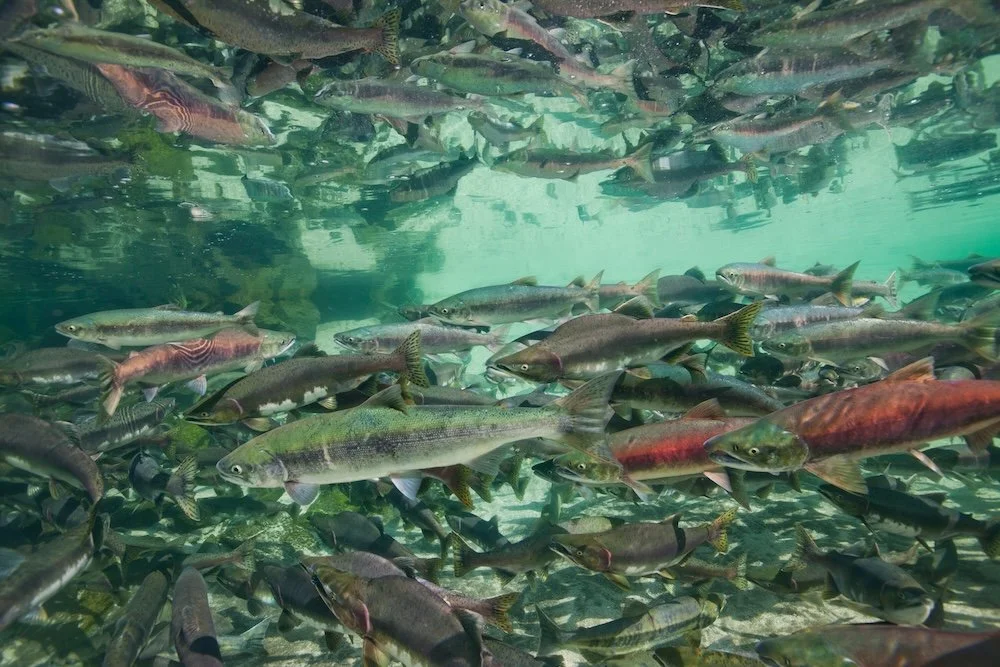
Bycatch in these fisheries includes salmon, halibut, and crab. While trawling is banned in Southeast Alaska, salmon and halibut harvested or killed elsewhere in the Gulf of Alaska and Bering Sea may be fish that would otherwise migrate into Southeast waters and contribute to local fisheries.
For coastal communities and ecosystems in Southeast Alaska, these upstream impacts matter.
What Is Being Proposed
The Alaska Healthy Habitat Alliance is advancing proposals before the Alaska Board of Fisheries that would:
Require pollock trawlers using pelagic gear in state waters to be regulated as bottom trawlers unless they can demonstrate they are not contacting the seafloor;
Require deployment of sensors or other technology to verify that nets are not dragging on the bottom;
Require use of “salmon excluder” devices — net modifications designed to allow some salmon to escape.
These measures aim to close regulatory gaps and better align gear classification with actual fishing behavior.
While this state-level process is limited in scope compared to upcoming federal actions later this spring, it represents an important step in strengthening oversight and habitat protection in Alaska waters.
Why The Boat Company Is Engaged
The Boat Company operates in Southeast Alaska under special use permits and has long supported habitat protection across the region.
We are a member of the Alaska Healthy Habitat Alliance because healthy marine ecosystems — from seafloor habitats to salmon migration corridors — are interconnected across the Gulf of Alaska.
Protecting coral forests and sponge gardens in one region supports fisheries and ecosystems throughout the state.
Take Action
Public comments to the Alaska Board of Fisheries are open through March 2, 2026. To learn more or submit your comment through the Alaska Healthy Habitat Alliance, visit:
https://www.alaskahealthyhabitatalliance.org/
This comment period is the first of several steps in preventing the devastating effects of bottom trawling and bycatch in Alaska.
The Boat Company remains committed in fighting for the health and well-being of Alaska’s fisheries.
Please stay tuned for more information, including announcements related to the upcoming federal public comment period.